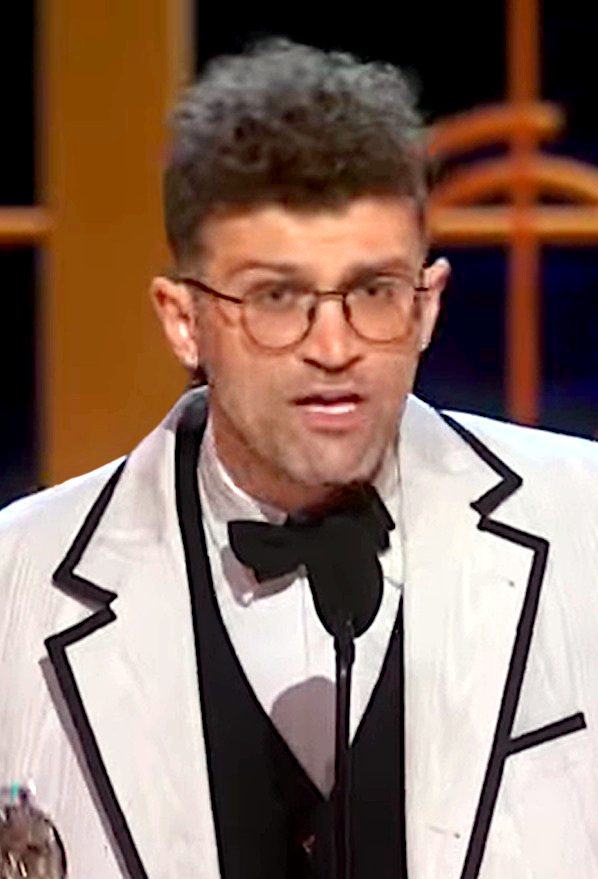
Sam Pinkleton Got a Hair Transplant in Athens and Then Wrote About It
Sam Pinkleton — the Tony Award-winning choreographer and director — didn't keep his hair transplant secret. He wrote about it.
Most celebrity hair transplant stories follow a familiar script: a sudden, suspiciously dense hairline, a flurry of tabloid speculation, and a publicist's flat denial. The subject says nothing. The internet says everything. Sam Pinkleton — the choreographer and director who took home the 2025 Tony Award for Best Direction of a Play for Oh, Mary! — chose a different approach. He went to Athens, had the procedure, and then told Condé Nast Traveler about it himself.
The story he tells is not really a hair transplant story. It's a travel essay that happens to include one.
In October 2025, Pinkleton flew to Greece, an emerging destination for hair transplants, for a procedure at Seneca Medical Group. He arrived a day early and used his free 24 hours to do what any first-time-since-childhood visitor would do: the Acropolis, the Ancient Agora, a rooftop bar at The Dolli hotel where the Parthenon sat in plain view. The next morning he checked in for his appointment, spent nine hours in the clinic, and was driven back to Ergon House — a gastronomic market with rooms above it — to begin recovery.
What follows is the part that lingers. Pinkleton describes sitting in his hotel room eating spanakopita, spraying saline on his scarred scalp, listening to church bells every thirty minutes through an open window. He admits to a brief stretch of self-consciousness, the I-can't-go-out-like-this spiral familiar to anyone who has ever recovered from anything. Then he overrules himself. He's in Athens. He wants a whole fish. He goes.
On his last day, walking from his hotel toward the Metropolitan Cathedral, he ducked into a small chapel called the Church of St. Eleutherius. He lit a candle. He made the sign of the cross — the first time, he says, since he was fourteen. Months later, his ninety-three-year-old grandmother pulled out photographs she'd taken in Greece in the 1960s, and there, in one of them, was Pinkleton's grandfather standing in front of that same chapel, with a full head of hair.
It is a story almost too neat to be true, which is what makes it land. Pinkleton frames the trip not as a cosmetic intervention to be hidden but as a small act of return — to a city, to a heritage, to a ritual he had drifted from. The hair transplant is incidental scaffolding for something larger about shame, vanity, and what it means to come back to where you started.
A Tony, a chapel, a grandfather's photograph. Not bad for a recovery week.